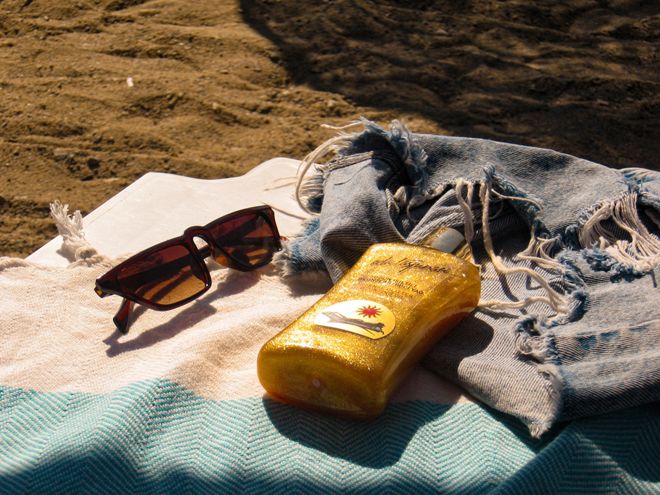
Photo Credit: by Eren Hizli, Pexels.com
You pack the car, drive to the beach, set up your umbrella, and then apply your sun protection. It sounds like the perfect summer routine.
Unfortunately, you may already have made your first sun-protection mistake.
Sunscreen seems simple at first blush, but there are many things to know in order to reap its important benefits. The U.S. Food and Drug Administration (FDA) recommends applying sunscreen about 15 minutes before sun exposure, not after you have settled onto the sand. But that’s not all. Are you also remembering to apply sunscreen generously and regularly, and after sweating or swimming, to provide the protection shown on the label?
Additionally, choosing a product can be confusing. Should you be looking for sunscreen or sunblock? Does mineral sunscreen really work like a shield? Which type is best for sensitive skin?
The familiar “sponge versus shield” comparison is simple, but the science is more complicated. Read on to learn all the critical tips to keep you safe while you have fun in the sun.
What Is the Difference Between Sunscreen and Sunblock?
Traditionally, sunscreen refers to products containing chemical ultraviolet (UV) filters. These products are sometimes described as absorbing ultraviolet radiation like a sponge.
Sunblock usually refers to products containing mineral ingredients, especially zinc oxide and titanium dioxide. These are described as creating a physical shield that reflects sunlight away from the skin.
That distinction does not fully reflect modern science or labeling.
Since 2014, the FDA has not allowed manufacturers to call products “sunblocks” in the United States. The agency explains that terms such as “sunblock,” “waterproof,” and “sweatproof” can overstate how much protection a product provides. No sunscreen blocks every UV ray, remains completely waterproof, or eliminates the need for reapplication.
Today, sunscreen is a wide category. Mineral, chemical, and hybrid formulas are all available.
What Is Chemical Sunscreen?
Chemical sunscreens—also called organic sunscreens because their UV filters are carbon-based—absorb UV radiation. According to the National Academies of Sciences, Engineering, and Medicine, the absorbed radiation is released as a negligible amount of heat rather than affecting the skin. Common ingredients include avobenzone, homosalate, octocrylene, octisalate, octinoxate, and oxybenzone.
Chemical sunscreen is often described as an invisible sponge. It forms a film on the skin, where its filters absorb UV energy before that energy can cause as much damage. (No sunscreen can block 100% of UV radiation and prevent all damage.)
Advantages of Chemical Sunscreen
Chemical formulas are often lightweight, easy to spread, and transparent. They may sit comfortably under makeup, blend over facial hair, and leave less visible residue on deeper skin tones. These qualities make them popular for daily facial use.
Disadvantages of Chemical Sunscreen
Some people find that chemical sunscreen irritates their skin or stings their eyes. Sometimes, skin reacts to the fragrances, preservatives, and other ingredients found in these sunscreens.
Some chemical sunscreens may also harm the environment as they enter the waterways through showering or swimming. Laboratory research has linked ingredients, including oxybenzone and octinoxate, to harmful effects in corals and other aquatic organisms. However, the National Academies of Sciences, Engineering, and Medicine says the real-world risks are not yet fully understood.
If you are concerned about waterways, you can reduce the impact by avoiding harmful sunscreen chemicals such as oxybenzone and octinoxate when swimming near delicate ecosystems. For more on sunscreen chemicals and marine life, see here.
What Is Mineral Sunscreen or Sunblock?
Mineral sunscreen—sometimes called physical sunscreen or sunblock—contains zinc oxide, titanium dioxide, or both.
Traditional explanations describe mineral sunscreen as microscopic mirrors that bounce UV rays away from the skin, almost like a shield. The truth is more complicated.
A peer-reviewed study found that zinc oxide and titanium dioxide provided only a small portion of their UV protection through reflection. The researchers concluded that mineral sunscreens primarily protect skin by absorbing UV radiation, not by reflecting or scattering it.
Mineral and chemical sunscreens; therefore, work more similarly than the “shield versus sponge” comparison suggests.
Advantages of Mineral Sunscreen
Mineral sunscreen may suit people with sensitive skin, rosacea, eczema, previous reactions to chemical filters, or frequent sunscreen-related eye stinging. The American Academy of Dermatology (AAD) recommends considering mineral sunscreen for sensitive skin. Fragrance-free products may be especially useful when irritation is a concern.
Disadvantages of Mineral Sunscreen
Mineral sunscreen may feel thicker or drier, collect in facial hair, pill under makeup, or leave a white, gray, or purple cast on skin.
Tinted mineral sunscreen can reduce the visible cast. Some tinted products also contain iron oxides, which may help protect against visible light that contributes to dark spots and hyperpigmentation.
The National Oceanic and Atmospheric Administration notes that mineral sunscreens may not be entirely harmless to the environment either. Nano-sized zinc oxide and titanium dioxide may also negatively affect marine life.
Does Mineral Sunscreen Work Immediately?
You might think that a chemical sunscreen needs 15 to 20 minutes to “activate,” while mineral sunscreen works instantly. This isn’t exactly true. The FDA recommends applying all sunscreens about 15 minutes before sun exposure, whether its active ingredients are mineral or chemical.
UVA vs. UVB: What Does Sunscreen Protect You From?
The two main forms of ultraviolet radiation relevant to sunscreen are UVA and UVB.
UVA is sometimes thought of as “aging,” whereas UVB is thought of as “burning.” However, the important thing to know is that both forms damage skin and contribute to skin cancer.
UVA Rays
UVA rays have longer wavelengths and penetrate more deeply into the skin. According to the Environmental Protection Agency, UVA contributes to skin aging, eye damage, and skin cancer risk.
UVA contributes to wrinkles, uneven pigmentation, and cellular damage. It also passes through ordinary window glass more readily than UVB, so exposure can occur while driving.
UVB Rays
UVB rays have shorter wavelengths and are a major cause of sunburn, even to your cornea. They also cause skin aging and skin cancer, and lower your body’s ability to fight illness.
UVB intensity changes with the season, time, altitude, latitude, and weather. Water, snow, and sand can also increase exposure by reflecting UV radiation.
What Does Broad-Spectrum Sunscreen Mean?
A sunscreen labeled “broad spectrum” has been tested for protection against both UVA and UVB radiation.
This wording is more important than whether the bottle says mineral, chemical, natural, sport, baby, or facial sunscreen.
The AAD explains that broad-spectrum sunscreen helps protect against sunburn, premature aging, and skin cancer.
Without broad-spectrum protection, a high SPF may mainly indicate protection against UVB-related sunburn—not protection against the equally dangerous UVA radiation.
What Does SPF Mean?
SPF stands for sun protection factor. It primarily measures protection against sunburn-producing UVB radiation when the sunscreen is applied at the label's recommended amount. You must look for “broad spectrum” on the label to ensure you are getting protection against both UVA and UVB radiation.
Despite what you may have been told, SPF 30 does not mean you can safely stay outside 30 times longer. Protection varies with environmental conditions and the amount applied.
According to the AAD, SPF 15 filters about 93% of UVB radiation, while SPF 30 filters about 97%. No sunscreen filters 100%. The AAD recommends broad-spectrum sunscreen with SPF 30 or higher.
A higher SPF may provide extra protection, but it does not last all day or eliminate the need for reapplication.
Mineral vs. Chemical Sunscreen: Which Is Better?
There is no universal winner. Both can provide effective protection when they are broad-spectrum, applied generously, and reapplied correctly.
Best Sunscreen for Acne-Prone Skin
Do not assume mineral sunscreen always clogs pores or that chemical sunscreen automatically prevents acne. Either type can feel heavy depending on the formula.
The AAD recommends looking for “non-comedogenic” or “won’t clog pores” if you have oily or acne-prone skin. A lightweight, oil-free fluid or gel may feel more comfortable for you.
Best Sunscreen for Sensitive Skin
The AAD recommends using a sunscreen labeled “sensitive skin.” Avoid products with fragrance, parabens, or oxybenzone (benzophenone-2, benzophenone-3, diosybenzone, mexenone, sulisobenzone, or sulisobenzone sodium).
Zinc oxide and titanium dioxide are recommended for people whose skin burns or stings when applying sunscreen.
Individual reactions vary, however. “Mineral” does not guarantee that every ingredient will suit your skin.
Best Sunscreen for Darker Skin
People with darker skin are less likely to burn, but they can still experience UV damage, hyperpigmentation, and skin cancer. The National Cancer Institute notes that skin cancer can affect people of every skin tone.
Chemical sunscreens often dry clear, and so may be a better choice for those with darker skin tones. Tinted mineral sunscreens can reduce white cast and may provide extra visible-light protection, so they are also worth considering.
Best Sunscreen for Children
For babies younger than six months, shade and protective clothing should be the first defenses, not sunscreen.
When adequate shade or clothing is unavailable, though, the AAD says a minimal amount of broad-spectrum, water-resistant SPF 30 sunscreen may be applied to exposed areas. Zinc oxide and titanium dioxide are less likely to irritate sensitive baby skin. Don’t forget to reapply sunscreen every two hours or after sweating or swimming.
Children 6 months and older can use a sunscreen made for children (most contain zinc oxide and titanium dioxide), along with shade, protective clothing, a hat, and sunglasses.
Is Chemical Sunscreen Safe?
Both the FDA and the AAD consider all regulated sunscreens safe and important to use whenever you are out in the sun.
Remember, as the AAD says, sunscreen plays a key role in protecting your skin from the sun. When you use a broad-spectrum sunscreen with SPF 30 or higher and water resistance, it can:
• Reduce your risk of developing skin cancer.
• Prevent sunburn.
• Decrease signs of early aging on your skin, like wrinkles, age spots, and sagging skin.
• Stop existing melasma from darkening and new patches from appearing.
• Reduce the risk of dark spots appearing when acne, psoriasis, or another skin condition clears.
Scientific studies support the benefits of wearing sunscreen when you are outside. That’s why the FDA tells Americans to wear sunscreen. On the FDA’s website, it says:
"Given the recognized public health benefits of sunscreen use, Americans should continue to use sunscreen and other sun protective measures."
Yes, some chemical sunscreen ingredients can be absorbed into the bloodstream, but absorption does not automatically mean danger.
The risks of unprotected UV exposure—including sunburn, premature aging, and skin cancer—are well established. People who prefer to avoid chemical filters can choose a broad-spectrum mineral sunscreen.
How to Apply Sunscreen Correctly
How you use sunscreen may matter more than whether you choose a mineral or chemical formula.
The FDA recommends using at least one ounce—about enough to fill a shot glass—to cover the exposed face and body of an average-size adult or child.
For effective coverage:
• Apply sunscreen about 15 minutes before going outdoors.
• Cover all skin not protected by clothing.
• Reapply at least every two hours.
• Reapply sooner after swimming, sweating, or towel-drying.
• Follow the water-resistance directions on the label.
All exposed skin needs to be covered. Frequently missed areas include the ears, lips, neck, hands, the tops of the feet, the hairline, and the exposed scalp.
Is Water-Resistant Sunscreen Waterproof?
No sunscreen is waterproof; however, some are water-resistant. For the best protection, look for that on the label.
Labels approved by the FDA must state whether a sunscreen remains water-resistant for 40 or 80 minutes during swimming or sweating. Reapply after that time or after towel-drying.
The label “sport” is unregulated and largely about marketing. Look for the tested water-resistance duration instead.
Can Medication Increase Sun Sensitivity?
Some prescription drugs, over-the-counter medicines, and topical products increase sensitivity to ultraviolet radiation. This means that if you’re taking certain medications, you need sunscreen even more.
The CDC notes that certain antibiotics, hormonal medications, benzoyl peroxide products, and other treatments may increase skin or eye sensitivity to UV exposure. Something as simple as a retinol-containing skin cream can increase your risk of sun damage.
Read your medication information and ask a pharmacist if you are unsure. Do not stop a prescribed medication without medical advice.
Sunscreen Is Only One Part of Sun Protection
Sunscreen should not be your only defense.
The EPA recommends checking the UV Index, seeking shade, wearing a wide-brimmed hat and protective clothing, and using UV-protective sunglasses in addition to broad-spectrum SPF 30 sunscreen.
And don’t forget, UV exposure can still occur on cool or cloudy days. Temperature measures heat, not ultraviolet intensity. Sun protection should be part of your daily routine.
Sunscreen vs. Sunblock Frequently Asked Questions
Is Sunblock Stronger Than Sunscreen?
No, the label “sunblock” does not indicate a stronger product. Sunblock is not an official strength category. Compare the SPF, broad-spectrum status, active ingredients, water resistance, and directions when considering various products.
Is Zinc Oxide Sunscreen a Sunblock?
Zinc oxide products are commonly called sunblock, but mineral sunscreen is the more accurate term.
Is Mineral Sunscreen Better Than Chemical Sunscreen?
Mineral sunscreen may suit sensitive skin, while chemical sunscreen may offer a lighter, more transparent finish. Neither is automatically better for everyone.
Should I Use SPF 30 or SPF 50?
Both can provide strong protection, though SPF 50 offers slightly more. No matter which you choose, it must always be applied generously and reapplied regularly.
The Final Verdict: Sunscreen or Sunblock?
When looking at the difference between sunscreen and sunblock, the key to know is that sunscreen is the accepted general term, while sunblock is largely outdated marketing language.
Chemical sunscreens are often lightweight and transparent. Mineral sunscreens may be less irritating for sensitive skin, but can feel thicker or leave a white cast. Both types primarily protect skin by absorbing ultraviolet radiation.
Instead of focusing on those terms, look for:
• Broad-spectrum UVA and UVB protection
• SPF 30 or higher
• Water resistance
• A formula suited to your skin
• A texture you will apply generously and reapply regularly
The best sunscreen is not necessarily the most expensive or the one with the highest SPF. It is the broad-spectrum product you will use correctly and consistently. If you’re not using it, it will not work.
Two of our favorite sunscreens are Ombrelle and Anthelios. They range in strength from SPF 30 to SPF 60 to meet all your sun protection needs.
If you are unsure which sunscreen is appropriate for your skin, allergies, medications, or medical conditions, ask a pharmacist, physician, or dermatologist.
Sources
1. American Academy of Dermatology Association. (2024, April 25). How do I know if I’m using the right sunscreen? American Academy of Dermatology Association (AAD). Retrieved June 26, 2026, from https://www.aad.org/public/everyday-care/sun-protection/shade-clothing-sunscreen/choosing-right-sunscreen
2. American Academy of Dermatology Association. (2026, May 1). How to decode sunscreen labels. American Academy of Dermatology Association (AAD). Retrieved June 26, 2026, from https://www.aad.org/public/everyday-care/sun-protection/shade-clothing-sunscreen/understand-sunscreen-labels
3. American Academy of Dermatology Association. (n.d.). Infant sun protection: How parents can keep their baby safe. Retrieved June 26, 2026, from https://www.aad.org/public/diseases/skin-cancer/prevent/sun-babie
4. Cole, C., Shyr, T., & Ou-Yang, H. (2015). Metal oxide sunscreens protect skin by absorption, not by reflection or scattering. Photodermatology Photoimmunology & Photomedicine, 32(1), 5–10. https://doi.org/10.1111/phpp.12214
5. Facts about ultraviolet radiation. (2024, February 20). Radiation and Your Health. Retrieved June 26, 2026, from https://www.cdc.gov/radiation-health/data-research/facts-stats/ultraviolet-radiation.html
6. National Academies Press (US). (2022, August 9). Introduction to sunscreens and their UV filters. Review of Fate, Exposure, and Effects of Sunscreens in Aquatic Environments and Implications for Sunscreen Usage and Human Health - NCBI Bookshelf. https://www.ncbi.nlm.nih.gov/books/NBK587270/
7. National Cancer Institute. (2024, November 12). Skin cancer on black and brown skin. Retrieved June 26, 2026, from https://www.cancer.gov/types/skin/skin-cancer-in-black-or-brown-skin
8. National Oceanic and Atmospheric Administration (NOAA). (2024, June 20). Sunscreen chemicals and coral reefs. National Ocean Service. Retrieved June 26, 2026, from https://oceanservice.noaa.gov/news/sunscreen-corals.html
9. Understanding Sunscreens in Aquatic Environments. (n.d.). The National Academies of Sciences, Engineering, and Medicine. Retrieved June 26, 2026, from https://nap.nationalacademies.org/resource/26381/interactive/
10. U.S. Food and Drug Administration. (2014, October 22). Questions and Answers: FDA announces new requirements for over-the-counter (OTC) sunscreen products marketed in the U.S. United States Food and Drug Administration. Retrieved June 26, 2026, from https://www.fda.gov/drugs/understanding-over-counter-medicines/questions-and-answers-fda-announces-new-requirements-over-counter-otc-sunscreen-products-marketed-us
11. U.S. Food and Drug Administration. (2026, June 9). Sunscreen: How to Help Protect Your Skin from the Sun. United States Food and Drug Administration. Retrieved June 26, 2026, from https://www.fda.gov/drugs/understanding-over-counter-medicines/sunscreen-how-help-protect-your-skin-sun
12. UV Index Overview. (2026, March 24). US EPA. Retrieved June 26, 2026, from https://www.epa.gov/enviro/uv-index-overview
###
Your email address will not be published. Required fields are marked with *.